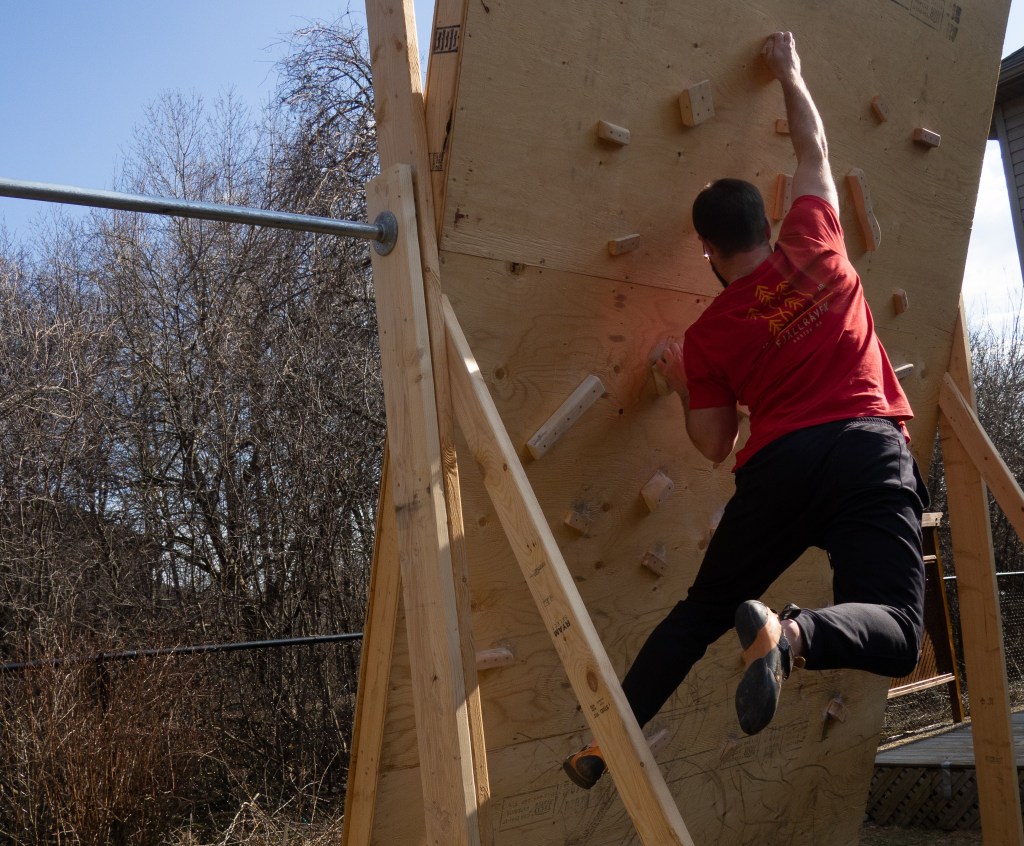
I’ve been thinking about the last few years as a time of self-improvement and transformation. I feel that my physical and mental states have improved dramatically. When I try to figure out what spurred my personal growth, it’s obvious that rock-climbing has played a huge role in developing a better mindset and skill-set to approach all facets of my life. To illustrate why I believe this, I’ve put together a short list of things that I’ve learned through my first 2 years of rock climbing. Some of these may seem self-evident, but bear with me.
Disclaimer: I don’t think these points are exclusive to rock-climbing. Many difficult skills requiring consistent physical and mental demand over a long period of time will likely have a similar impact. However, due to the fun nature and gradual learning curve of rock climbing, it is a relatively easy skill to become heavily invested in. It’s like a puzzle video game: you quickly reach a high skill level without even realizing because the problem-solving itself is such an enjoyable experience. Like candy crush but with your body.
Picking Up a “Useless” Skill is Worthwhile
It’s easy to find reasons why you shouldn’t do something. After all, time is valuable and a lot of activities can seem pointless. Rock climbing is a good example. Arbitrarily ascending rock formations isn’t bettering humanity in any obvious way. However, the experience of voluntarily investing your time and energy into something difficult, like rock climbing, can be an effective tool for self-improvement. For many people (myself included), a sense of accomplishment can be hard to come by. It usually involves a project at school or work, and it often lacks an overarching objective. Rock climbing has allowed me to implicitly recognize that I’m not a lost cause and that I can achieve difficult tasks with work and practice. Everyone is taught this explicitly – that with work you can become good at things – but it’s different to have a gut feeling that this is really true for yourself. This is hugely important for building confidence to accept bigger challenges inside and outside of climbing. Projecting a climb teaches you that you can grow to meet a challenge. You learn that you can take a big step into chaos (creds to JBP), at work, school, or life in general, and still come out on top with persistence.
Learning a Skill is a Skill
In my experience, developing skills can be a daunting and challenging task. I think that this is because the act of developing a skill is, in itself, a skill. This process deserves as much attention as the skill itself. Climbing has taught me that developing skills require thoughtfully organized practice. When you start climbing you usually jump through several grades pretty quickly. During my first year, I was surprised by how much skill I developed without even thinking about it. I believe that the reason this comes so easily is because the climbing framework encourages gradually increasing difficulty, and incremental goals. In any given climbing gym there is a wide variety of route difficulties to choose from. Furthermore, the routes are reset periodically, in different styles and difficulties. The newbie and the crusher can try problems at increasing difficulty levels and track their progress. Generally, they’ll get stumped at some point and run out of problems they can do in that set. But they never get in a rut because the routes are periodically replaced with a new, different set (search up “route setter”, it’s a very creative job). This creates a positive feedback loop that encourages the climber and gradually develops their skill level. As they improve, they will undoubtedly need to start supplementing with specific strength, mobility, and technique training to achieve better results on the climbing wall and surpass plateaus. In this way, the sport forces climbers to reinvent themselves and find better ways to develop their skills, teaching them to be more aware of the process and how it affects the result. This awareness has led me to improve in other facets as I’ve begun implementing the same process-oriented mindset in work and with other interests (apparently blogging).
Passion Can be Created, Through Mild Obsession
When trying to adopt something new, like a skill or activity, one of the most difficult things is actually dedicating the time and focusing on it. When you don’t have a passion for something, even if you know it’s useful, it can seem overly demanding and intimidating. I personally find it very hard to motivate myself to do something I’m not passionate about. My solution to this dilemma is to create a passion for what I’m doing. As strange as this sounds I think it’s the best option. It’s not like people are born with their respective passions and never develop beyond those. Nobody is born a rock climber (except maybe Adam Ondra, that guy’s a freak). People unintentionally acquire new passions throughout their lifetime and there is no reason they shouldn’t be able to do so intentionally. I’ve discovered that if I obsess over a topic for a relatively short period of time, a few days or weeks, I can develop a deep interest in it. Before climbing, I had never really committed to learning a skill, so I can recognize the pattern of behavior that led to becoming truly dedicated. I was introduced to climbing by a couple of friends. Despite my forearms burning like purgatory, the satisfaction of finishing a problem caught my interest and I started going regularly. However, the reason I’m still climbing several times a week after 2 years is a little more complex. As I started climbing, I immersed myself in the archives of YouTube rock climbing videos, watching people do incredible feats on the rock and in competition. I also started reading blogs and watching movies that follow the most famous climber’s journey’s. Rather than just partaking, I immersed myself in the culture, the characters, and the drama of the world of climbing. I became slightly obsessed. I learned that if you can visualize the thing you’re doing as having adventure and a narrative and if you can visualize yourself as being part of that adventure, then you can develop a passion for it. This follows with most things. Take a science student who hates homework. This student could read about the great scientists of the past. Read about their drive, passions, and drama. This will turn homework from a chore into character development for someone who’s a part of a larger story. Develop your passion through obsession, create a narrative and skills will follow much more easily.
 Luke Tambakis
Leave a comment